A corkage fee is what a restaurant charges to open and serve a bottle of wine you brought from home. In the US it usually runs somewhere between $10 and $50 per bottle, though some places charge more and some waive it altogether.
That one fee covers a lot: the glassware, the opening, the pouring, sometimes decanting, and the simple fact that you are sitting at a table drinking something the restaurant did not sell you. Here is how corkage works, what to expect when you call, and how to bring your own bottle without anyone rolling their eyes.
why restaurants charge corkage at all
Wine is one of the ways a restaurant pays its rent. When you bring your own bottle, the restaurant loses the sale it would have made from its own list, and the corkage fee recovers a bit of that. It also pays for real work. Someone has to bring clean glasses, open the bottle, pour it properly and clear everything afterward.
It helps to know that a bottle on a restaurant list is usually priced at several times what it costs in a shop. That is normal, not a scam, but it explains why corkage exists and why it can be a bargain. We walk through the numbers in our post on why restaurant wine costs so much.
what a corkage fee usually costs
Fees vary a lot by city and by the kind of restaurant. A rough picture:
- Casual neighborhood spots: often on the lower end, roughly $10 to $25 a bottle, and sometimes nothing at all.
- Mid-range and nicer restaurants: more often $25 to $50 a bottle.
- High-end dining rooms: can be higher, sometimes well above $50, and some do not allow outside wine at all.
Some restaurants waive the fee on quiet nights (a Monday or Tuesday is common) or if you also buy a bottle from their list. Others cap the number of bottles you can bring, often one or two per table. The only reliable way to know is to call and ask. Ask for the fee per bottle, whether there is a limit, and whether there are nights it is waived.
byob is not legal everywhere
This one surprises people. Whether a restaurant can let you bring your own wine depends on state and local liquor laws, and on the kind of license the restaurant holds. In some places a restaurant without a liquor license can allow it. In others the opposite is true, and a place that sells wine cannot legally open yours. Some cities do not allow it at all.
So if a restaurant says no, it is often not being difficult. It may not have a choice. A quick phone call before you leave the house saves you from standing at the host stand holding a bottle you cannot drink.
corkage etiquette: the rules nobody writes down
Corkage works best when everyone treats it as a favor rather than a right. A few habits keep it that way:
- Call ahead. Confirm they allow it, what the fee is, and how many bottles you can bring.
- Do not bring a wine that is on their list. Check the list online first. Showing up with the same bottle they sell is the one thing that genuinely annoys a restaurant.
- Bring something special. Corkage is for the bottle you have been saving, a birthday wine, something you carried home from a trip. A cheap bottle from the corner store, brought to save a few dollars, sends the wrong message.
- Offer the server or sommelier a taste. A small pour is a classic gesture. They may say no, and that is fine, but the offer is appreciated.
- Tip as if you had bought it there. Many people tip on roughly what the bottle would have cost on the list, or add a flat amount on top of the corkage fee. The service you got was the same either way.
- Do not haggle over the fee. If it seems too high, order from the list instead.
If you are nervous about how to hand the bottle over, our guide to what to say to a sommelier has the exact phrases. Something like "We brought a bottle for a special occasion and called ahead about corkage" is about all it takes.
what happens once you hand over the bottle
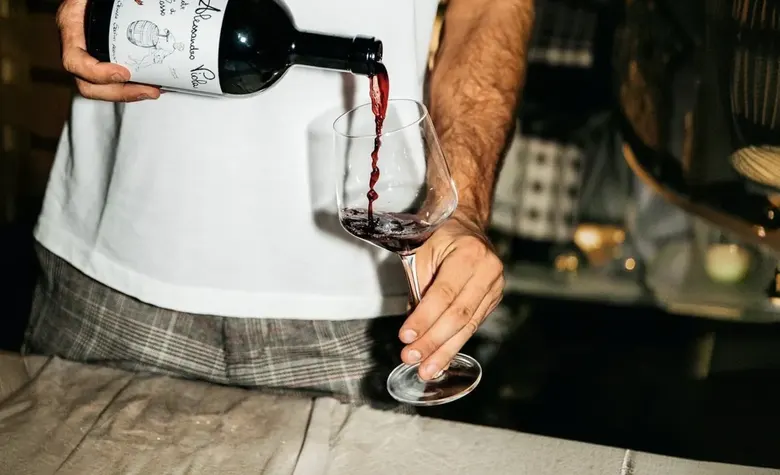
Give the bottle to your server or the host when you arrive, not halfway through the meal. The restaurant usually takes it from there. They bring proper glasses, open it at the table (or in the back if you prefer) and pour. If the wine is an older red, they may offer to decant it, which just means pouring it into a glass vessel to leave any sediment behind and give it some air.
You do not have to do anything but say thank you. If you would rather open it yourself, that is usually fine too, though most people are happy to let the pros handle it. If you do end up holding the corkscrew, our post on how to open a wine bottle without making a mess has you covered.
One thing to know: if your bottle turns out to be faulty, that is on you, not the restaurant. They will still charge the corkage. It is the one real risk of bringing your own, so pick a bottle you trust.
when corkage is worth it (and when it is not)
The math is simple. Compare the corkage fee to the markup you would pay on a similar bottle from their list. If a restaurant charges $30 corkage and a bottle that costs $25 in a shop sits on their list at $75, you come out well ahead by bringing your own. If you are bringing a $15 bottle to a place charging $40 corkage, you do not, and you would probably be happier picking something off the list.
Corkage shines when:
- You own a bottle that means something and want to drink it with a good meal.
- The restaurant's markup is steep and its list is not very interesting.
- You want to drink something they simply do not carry.
It is less worth it when the restaurant has a well-priced list, when the fee is high, or when the whole point of the night is to try something new. In that case, let them pour. And if their list makes your eyes glaze over, Green Glass can read it and hand you one bottle that fits your taste, so you get the fun of discovery without the guesswork.
questions people ask
What does corkage mean?
Corkage is the fee a restaurant charges to open and serve a bottle of wine you brought in yourself. It is usually set per bottle and covers glassware, opening and service.
How much is a typical corkage fee?
In the US, most restaurants charge somewhere between $10 and $50 per bottle. Casual places sit at the low end, while fine dining rooms charge more or do not allow outside wine at all.
Do you tip on corkage?
Yes. Tip as if you had bought the bottle from the restaurant, either on roughly what it would have cost on their list or by adding a flat amount to the bill.
Can every restaurant let you bring your own wine?
No. BYOB depends on state and local liquor laws and on the restaurant's license, so some places cannot legally allow it. Always call ahead to check.
Is it rude to bring your own wine to a restaurant?
Not if you call ahead, avoid bringing a bottle they already sell, bring something special and tip well. Treat it as a favor and most restaurants that allow corkage are glad to do it.