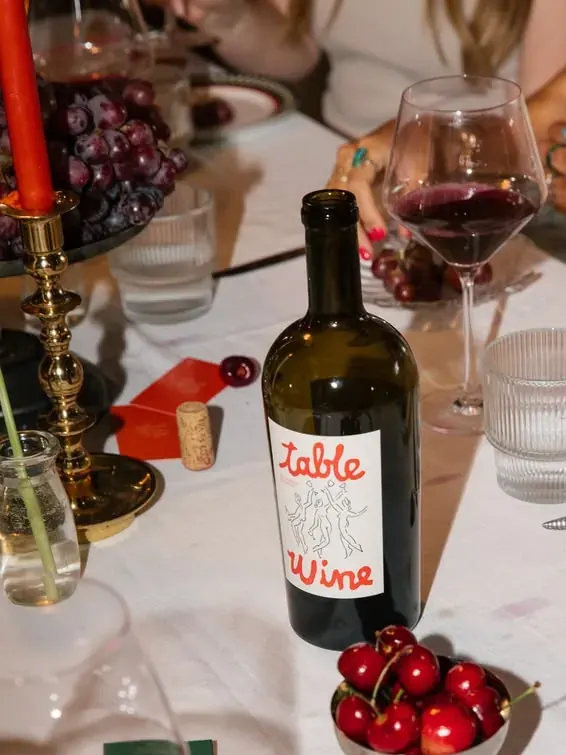
A sommelier (say "som-el-YAY") is the person at a restaurant whose whole job is choosing and serving wine. To talk to one, tell them three things and ask one question: your budget, what you usually like, what you are eating, then "what would you pick?" That is the entire skill.
You do not need wine words. You do not need to have an opinion about oak. A sommelier would rather hear "I like smooth reds and we are splitting the chicken" than a guess at a grape you read about once. Below are the exact phrases, grouped by situation, so you can borrow them word for word.
the one-sentence formula
Everything a sommelier needs fits in one sentence: budget, taste, food, question. Mix and match from the examples below.
- "We're thinking around here (point at a price), we usually drink something smooth and not too heavy, we're having the steak and the salmon. What would you pick?"
- "Something in this range, white, crisp and not sweet, to go with the pasta. What do you like for that?"
- "Around this much, a red that isn't too heavy, and we're sharing a bunch of small plates. What would you go with?"
Notice the question at the end. "What would you pick?" turns the sommelier into your ally. They now get to do the fun part of their job, and the pick is theirs to stand behind. For the whole evening, from opening the list to the tasting pour, see our guide to ordering wine at a restaurant.
how to signal your budget without saying the number
Nobody wants to announce "fifty dollars" across the table on a date. You do not have to. Sommeliers handle this a hundred times a week and have a quiet system for it.
- Open the list, put your finger on a bottle at the price you want, and say: "Something like this." They will read the price, not the wine, and keep every suggestion near it.
- If you are comfortable saying a number, "around sixty for the bottle" is perfectly normal and nobody blinks.
- If they suggest something pricier: "Is there anything a bit closer to this one?" and point again. No apology needed.
A good sommelier will never push you above the price you pointed at. If one does, that tells you about the restaurant, not about you.
how to describe what you like without wine words
Plain language works better than borrowed vocabulary. Sommeliers translate everyday words into wine terms all day. Pick whichever of these sounds like you.
- "I like reds that are smooth, not heavy."
- "I like big, bold reds." (That means full flavor and a drying feel on your gums, which wine people call tannin.)
- "Something crisp and not sweet."
- "I actually like a little sweetness." (Say this proudly. Lots of great wine is a touch sweet.)
- "I like fruity wines, but not sweet." (Fruity and sweet are different. Fruity means it smells like fruit; sweet means sugar.)
- "I usually drink Pinot Grigio" or "I usually drink Cabernet." Naming the grape you buy at the store is the single most useful thing you can say.
- "Last time I had something I loved, it was from Spain, I think." Half-remembered is fine. It still narrows things down.
- "I don't love wines that taste like butter" or "I don't like the ones that make my mouth feel dry." Dislikes are gold.
If you cannot describe what you like because you have never paid attention, spend one dinner noticing. Our simple guide to tasting wine gives you four steps and a few words that will come in handy next time.
If you would rather not say any of it out loud, Green Glass has a Show Somm view built for exactly this moment. It turns your taste profile into one clean screen you can hand across the table: your budget at the top, a few plain phrases for what to pour you and what to avoid, which types you prefer, and how far you want to be pushed. The sommelier reads it and takes it from there.
what to say about the food
Food is the easy part because you already know what you are ordering. Say it plainly and let the sommelier do the matching.
- "We're having the steak and the fish. Is there one bottle that works for both?"
- "We're sharing a lot of small plates, something flexible."
- "The dish is pretty spicy. What holds up to that?"
- "We haven't decided yet. Can you suggest something, or should we order food first?"
- "Just a glass with the appetizer, then we'll pick a bottle for the mains."
The old red-with-meat, white-with-fish rule is a rough guide, not a law. If you want red with your fish, say so. "We want red regardless, what red works with the halibut?" is a great question and gets a thoughtful answer.
what to say if you do not like the wine
The small tasting pour is there to check the bottle is not faulty, not to check whether you love it. But if the wine is wrong, you can still speak up. Here is how, from mildest to firmest.
- If it smells like wet cardboard or a damp basement, that is a flaw called "corked." Say: "I think this might be corked, could you check it?" They will smell it and bring another bottle. This is routine.
- If the wine is fine but not what you expected: "This is a lot heavier than I was picturing. Is there something lighter in the same range?" Many restaurants will swap it, especially if you have only had the tasting pour.
- If you just do not like it: "This isn't really my thing. What would you suggest instead?" Be polite and direct. Most sommeliers would rather fix it than watch you suffer through a bottle.
- If they insist the wine is sound and you are not sure: "Okay, let's give it a few minutes." Some wines open up after a little air.
What not to do: drink half the bottle, then complain. Speak up at the first pour or the first glass.
how to sound informed when you are not
You do not have to bluff. But a couple of phrases make you sound like someone who knows what they want, which is all "informed" really means at a table.
- "What are you excited about right now?" Sommeliers love this. It invites them to pour something they picked for the list themselves.
- "Is there a good value on the list that people overlook?" This gets you their secret favorite, often at a kind price.
- "We'd rather try something new than our usual." Gives them permission to be adventurous within your budget.
- "Can you tell me a bit about this one?" while pointing at any bottle. You learn something and give nothing away.
And here is what not to worry about. You do not need to swirl, sniff and nod at the tasting pour; a quick sip and "that's great, thank you" is all it takes. You do not need to pronounce anything correctly (point at the list instead). You do not need to know the vintage, the region or the word "terroir." Asking "what does that mean?" never makes you look dumb. It makes you look interested, and sommeliers light up when someone is interested.
One more thing: not every restaurant has a sommelier. If your server shrugs at the list, the same formula still works, but you may be on your own. That is when an app like Green Glass earns its spot in your pocket: it reads the wine list, checks each bottle against your taste, and hands you one pick, so you still have a knowledgeable friend at the table.
a sample exchange, start to finish
Here is how it sounds in real life. Two people, a mid-priced restaurant, no wine knowledge.
- You: "Could we get some help with the wine list?"
- Sommelier: "Of course. What are you in the mood for?"
- You: (finger on a price) "Something around here. We usually drink reds that are smooth, not too heavy. I'm having the roast chicken and she's having the short rib."
- Sommelier: "Nice. Are you open to something you might not have tried?"
- You: "Sure, as long as it's in that range. What would you pick?"
- Sommelier: "There's a Grenache blend from Spain right at that price that's soft and juicy and works with both dishes."
- You: "Perfect, let's do that."
- Sommelier: (pours a small taste)
- You: (sip) "That's lovely, thank you."
Nine lines, maybe forty seconds, and nobody said a single wine word except the sommelier. Point at a price, describe what you like in plain words, say what you are eating, and ask what they would pick. The rest is their problem, and they are happy to have it.
questions people ask
What is a sommelier?
A sommelier is a trained wine professional who builds a restaurant's wine list, helps guests choose a bottle and serves it. The word is French and is pronounced "som-el-YAY."
What should I say to a sommelier if I know nothing about wine?
Tell them your budget (point at a price on the list), what you usually drink in plain words, and what you are eating, then ask what they would pick. You do not need any wine vocabulary.
How do I tell a sommelier my budget without saying it out loud?
Open the list, put your finger on a bottle at the price you want and say "something like this." The sommelier will read the price and keep suggestions near it.
Can I send a wine back if I do not like it?
If the wine is faulty (it smells like wet cardboard, it is probably corked), yes, always. If it is simply not to your taste, ask politely at the first pour and many restaurants will swap it.
Do I have to tip the sommelier separately?
No. A normal tip on the total bill is all that is expected. A separate tip for a sommelier who went out of their way is a kind gesture, not a rule.