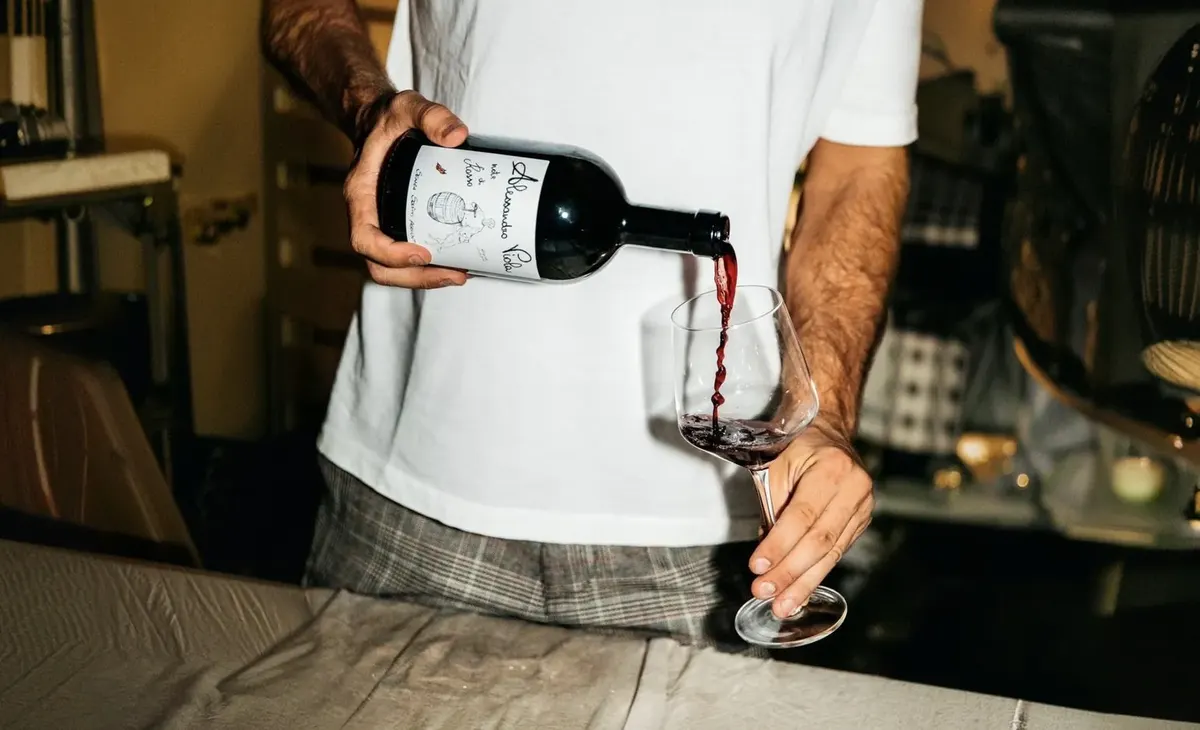
The safest wine to bring as a gift is a bottle of good sparkling wine in the roughly $20 to $30 range: a Crémant from France, a Cava from Spain or a well-made Prosecco from Italy. Almost everyone likes bubbles, it fits any occasion, and it never looks like you are trying too hard.
Sparkling works because it dodges every problem a gift bottle can have. You do not need to know whether the person prefers red or white. You do not need to know what is for dinner. It reads as celebratory without being flashy, and it keeps for months on a shelf if the host does not open it right away. Crémant is the quiet star here. It is French sparkling wine made the same slow way as Champagne, just from regions outside Champagne, so it costs a fraction of the price. If you want the details, our Crémant explainer covers what to look for on the label.
That is the whole answer for most situations. The rest of this post is for when you want to tailor the bottle a bit, spend more or less, or avoid the small mistakes that make a wine gift land badly.
how much to spend on a gift bottle
Spend about what you would spend on any other host gift. A bottle that is wildly more expensive than the evening calls for does not make you look generous. It makes the host wonder if they should have cooked something fancier. Here is rough guidance by price band, with styles rather than brands, since labels change and shops stock different things.
- Around $15: fine for a big casual party, an open-house housewarming or a potluck. Cava and Prosecco are strong here, and so are everyday reds like a Côtes du Rhône (a soft, juicy French red) or a Spanish Garnacha.
- Roughly $20 to $30: the sweet spot for most dinner parties and holiday visits. This buys a Crémant, a better Prosecco, a Chianti Classico, an Oregon Pinot Noir or a crisp Sancerre (Sauvignon Blanc from France's Loire Valley).
- Roughly $40 and up: for a close friend, a milestone, or someone who really loves wine. Champagne, a top Crémant from a small producer, an aged Rioja or a Barolo all make sense. Only go here when the relationship and the occasion both justify it.
If a shop only has bottles outside your range, it is fine to move a band in either direction. Nobody checks receipts.
match the bottle to the occasion
The right bottle for a dinner party is not the same as the right bottle for a housewarming, mostly because of what the host will do with it.
At a dinner party, the host has almost certainly planned the wine. Your bottle is a thank-you, not a contribution to the table, so you do not need to match it to the food. Sparkling or a medium-bodied red is ideal because either one is easy to enjoy on a random weeknight later. If the host did ask you to bring wine for the meal, that is a different job, and our dinner party wine guide covers how to pick bottles that go with whatever is cooking.
For a housewarming, think of the bottle as the one they open on their first quiet night in the new place. Something that does not need special glasses, a decanter or a particular dish. Sparkling, a Pinot Noir or a Rioja (a Spanish red made mostly from the Tempranillo grape) all fit. Skip anything delicate that could get knocked around during the move-in chaos.
For a holiday visit, lean festive. Sparkling again, or a red that can handle a big table of food, like a Beaujolais, a Pinot Noir or a Zinfandel. If you are staying several days, bringing two different bottles is a kind gesture and gives the host options.
if you know their taste, go one step better
Once you know what someone likes, you can skip the universal answer and pick something closer to home. The trick is to stay inside their taste but choose a bottle they probably would not buy for themselves on a Tuesday.
If you are both on Green Glass, you can skip the guessing. The gift a wine feature pulls your friend's taste profile, asks the occasion and your budget, then lets you scan the shop shelf and hands you three bottles they will actually like. It works for people who are not on the app too: describe them in a sentence and it does the same thing from that.
- For a red drinker: a crowd-friendly red with medium body and gentle tannin (the drying grip you feel on your gums). Pinot Noir, Rioja, Chianti Classico and Côtes du Rhône all land well with almost anyone who likes red.
- For a white drinker: a crisp, dry white. Sancerre or another Loire Sauvignon Blanc, Albariño from Spain, a dry German Riesling or a Chablis (unoaked Chardonnay from Burgundy) are all safe and feel a touch more special than the usual bottle.
- For a wine lover: something with a story they can read on the label. A grower Champagne (made by the people who farm the grapes), a traditional-method sparkling from an unexpected country, a Rioja Gran Reserva with some age, or a bottle from a region they have mentioned to you. A good dessert wine is also a fun gift if you know they have a sweet tooth.
If you want to know what you are giving, buy two and open one at home first. Our beginner's guide to tasting wine will help you put words to what you find, which also makes for a better note on the gift.
what to skip
Most wine gift mistakes come down to the same thing: picking a bottle for how it looks instead of how it drinks. A few styles and situations to avoid.
- Novelty labels and gimmick bottles. Cartoon animals, puns, glitter, odd shapes. They signal that you spent thirty seconds on it, and the wine inside is usually an afterthought.
- Anything you would be embarrassed to drink yourself. If you would not pour it at your own table, do not hand it to a friend.
- Very sweet wines, unless you know the person loves them. Many casual drinkers do not, and a sweet bottle can sit untouched for years.
- Very obscure or challenging styles, like orange wine, pet-nat (a cloudy, slightly wild natural sparkling) or anything described as funky, unless you know they are into that. Save the adventurous bottle for someone who has asked for one.
- Huge, heavily oaked, tannic reds when you have no idea of their taste. People who love them really love them, but plenty of people find them hard going.
- A bottle that needs years in a cellar. Most hosts will open a gift within a few weeks, so give them something that is ready now.
how to hand it over without making it weird
The etiquette here is simple, and it mostly comes down to not putting pressure on the host.
Do not expect them to open it that night. Say something like "this is for you, whenever you want it" so they know it is a gift and not a demand. If they do open it, great. If they tuck it away, also great. If you would like them to have the option, chill a sparkling wine before you arrive and mention that it is cold. Then let it go.
A short note helps more than fancy wrapping. One line on a tag, like why you picked it or what to open it with, turns a bottle into a gift. A plain gift bag or a sheet of tissue paper is plenty. Skip the enormous bow. Do not mention the price, how rare it is or how hard it was to find. If someone asks, tell them. Otherwise the bottle speaks for itself.
And if you are standing in a shop with no idea where to start, ask. Tell the person behind the counter your budget, the occasion and anything you know about who it is for. That is their whole job, they do it all day, and nobody there thinks less of you for asking. A good shop will usually walk you straight to two or three bottles that fit.
questions people ask
Is it rude to bring wine to a dinner party?
No, wine is one of the most common and welcome host gifts. Just treat it as a gift for the host rather than something you expect to drink that night.
How much should I spend on a wine gift?
Roughly $20 to $30 covers most host gifts. Around $15 is fine for a casual party, and $40 and up makes sense for a close friend, a milestone or a serious wine lover.
Should I bring red or white wine as a gift?
If you do not know the person's taste, bring sparkling wine instead, since it suits almost everyone. Among still wines, a medium-bodied red like Pinot Noir or a crisp white like Sauvignon Blanc is the safest choice.
Does the host have to open the wine I bring?
No. The host decides what to serve, and the bottle you bring is a gift for them to enjoy whenever they like.
Do I need to wrap a wine gift?
A simple gift bag or tissue paper and a short handwritten tag are plenty. The note matters more than the wrapping.