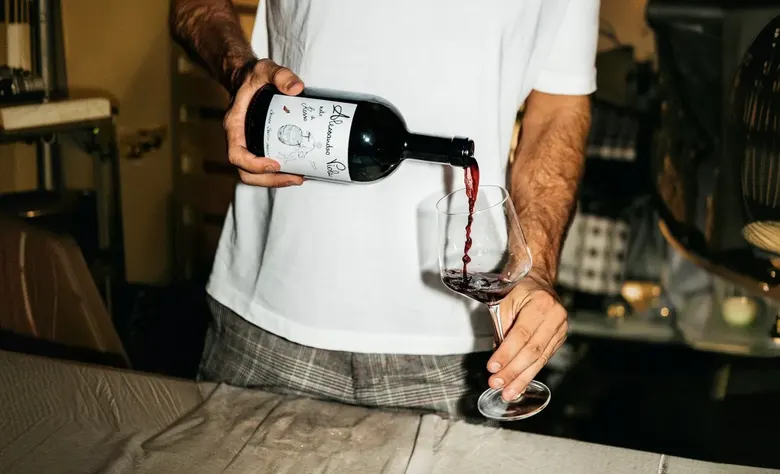
Mendoza Malbec tastes like a big, soft hug of dark fruit: ripe plum and blackberry, a hint of violets, often a dusting of cocoa, with tannins (the drying, grippy feel on your gums) that stay gentle. A good bottle costs about what a takeout dinner costs, with many very good ones landing in the mid teens at the store, and nearly every restaurant list has at least one.
That combination of plush taste and fair price is why Malbec has quietly become the house red for so many people who would never call themselves wine people. Here is what you are actually drinking, why it costs less than it tastes like it should, how the two famous sub-areas differ, and how to order it at a steakhouse without a second thought.
why mendoza malbec is such good value
Malbec is originally a French grape. In its home in southwest France it can be dark, tough and a little stern. When it was planted in Argentina it found sun, altitude and dry air, and it relaxed. The fruit got riper, the tannins got softer, and the wine became something you want to drink on a Tuesday rather than something you have to wait a decade for.
Mendoza is a high desert. Rain is rare, so the vines are watered with snowmelt from the Andes and the grapes ripen reliably most years. Reliable harvests, lots of planted vineyard and lower costs than the famous regions of Europe and California add up to plenty of good wine at friendly prices.
The other half of the value story is that Malbec does not need years in a cellar to taste good. Most bottles are made to drink within a few years of the harvest, so you are not paying for anyone's storage time. You buy it, you open it, it is ready.
what it tastes like, in plain words
Pour a glass and the first thing you notice is the color: a deep purple that is nearly black in the middle, often with a magenta rim. Then come the smells. Plum and blackberry lead, with violets or other dark flowers behind them. Some bottles add cocoa, vanilla or a toasty note, which usually comes from the oak barrels the wine aged in.
In your mouth it is full-bodied (it feels weighty, like whole milk rather than skim), juicy and smooth. The tannins are there, but they are rounded rather than scratchy. Acidity is moderate, so it does not make you pucker. Bitterness is low. For most people it is simply easy to like.
Oak is the main variable. Cheaper bottles usually see little or no oak and taste fresh and fruity. Reserve-style bottles spend more time in barrel and come out richer, with more vanilla, mocha and spice. Neither is better; it is a matter of mood. If you want a quick way to notice these things in your own glass, our beginner's guide to tasting wine walks you through it in a few minutes.
A handy comparison: if you like Cabernet Sauvignon but find it harsh, or you like Merlot but want more power, Malbec sits right between them.
altitude changes the style: lujan de cuyo vs the uco valley
Mendoza's vineyards sit in the foothills of the Andes, and most of them are high. Height matters because it brings cool nights. Warm, sunny days ripen the grapes; cold nights keep their freshness. Move higher and the balance tips toward fresh. Move lower and it tips toward ripe. That one idea explains most of the differences you will taste between the two names you see most often on labels.
- Lujan de Cuyo sits just south of Mendoza city and is the classic Malbec heartland. It is a bit lower and warmer, so the wines are rounder and plusher, with ripe plum, soft tannins and often that cocoa note. If you picture a textbook Malbec, this is it.
- Uco Valley (Valle de Uco on the label) is further south and higher up, so it is cooler. The wines taste fresher and brighter, with more floral lift, firmer but still friendly tannins, and sometimes a stony or herbal edge. Many of the region's more ambitious bottles come from here, and you may see village names like Altamira or Gualtallary on the label.
- Just "Mendoza" on the label usually means the grapes came from several spots across the region. These are the everyday bottles: fruity, soft and made to be opened tonight.
You do not need to memorize any of this. Remember one line: lower and warmer means plusher, higher and cooler means fresher. Pick whichever sounds like you.
what to pay
Prices move around by store and city, so think in tiers rather than exact numbers.
- Under ten dollars. Simple, fruity, soft. Fine for a weeknight or a big party, and better than most reds at the same price.
- Mid teens. The sweet spot. This is where many of the best-value bottles live: more depth, a little oak, real character. If you only remember one tier, remember this one.
- Twenties to thirties. Single-vineyard and reserve bottles, often from the Uco Valley. More structure, more oak, more complexity. Worth it for a steak dinner or a gift.
- Above that. Prestige bottles exist and some are lovely, but the jump in quality is smaller than the jump in price. Spend here out of curiosity, not obligation.
At a restaurant, Malbec is usually one of the better deals on the list. It starts cheap, so even after the markup it tends to land among the least expensive reds, and because it shows well young you are rarely getting a bottle that needed more time. If you have read our Napa Valley guide, you know how fast Cabernet prices climb; Malbec is the pleasant opposite.
easy steakhouse orders
Argentina's national meal is beef on the grill, and Malbec grew up next to it. The fat and protein in a steak soften the wine's tannins, and the wine's dark fruit stands up to char and salt. You almost cannot get this pairing wrong, but you can tune it.
- Ribeye or strip steak: a Lujan de Cuyo Malbec or any bottle described as rich or plush. Fatty cut, generous wine.
- Filet or a leaner cut: an Uco Valley Malbec. The extra freshness keeps a lighter steak from being steamrolled.
- Skirt steak with chimichurri, or a burger: the least expensive Malbec on the list. Herbs and garlic want fruit, not oak.
- Lamb, short ribs or a mushroom main: Malbec works here too. Go richer for braises, fresher for mushrooms.
When the server comes, you only need one sentence: "Could I get the Malbec from Mendoza?" If there is more than one, ask "Which one is fresher and which is richer?" and pick based on your steak. That is the whole script. For more confidence with the rest of the list, our guide to ordering wine at a restaurant covers the awkward parts. And if you would rather have the choice made for you, Green Glass reads the list and matches it against your taste profile so you get one pick instead of twenty options.
beyond steak, plus two small tips
Malbec is not a one-trick wine. It is happy with empanadas, grilled sausages, roasted vegetables, hard cheeses, barbecue and a sausage or pepperoni pizza. Anything with a bit of smoke, salt or fat will be glad to see it.
Two things make a cheap bottle taste more expensive. First, serve it slightly cool: fifteen minutes in the fridge before opening. Big, fruity reds taste heavy and flat when they are warm, and a little chill brings the fruit back into focus. Second, buy the youngest vintage on the shelf. Everyday Malbec is at its best in the first two or three years, so fresh is a feature, not a flaw. Recork what you do not finish and keep it in the fridge; it will be fine for a couple of days.
questions people ask
Is Mendoza Malbec sweet?
No, it is a dry red wine. The ripe plum and blackberry fruit can read as sweet, but there is little or no sugar left in the wine.
How much should I pay for a good Mendoza Malbec?
Many very good bottles land in the mid teens at the store. Spending into the twenties usually gets you more oak, more structure and often an Uco Valley address.
What is the difference between Lujan de Cuyo and Uco Valley Malbec?
Lujan de Cuyo is lower and warmer, so its Malbec is rounder and plusher with ripe plum and cocoa notes. The Uco Valley is higher and cooler, so its Malbec is fresher and more floral with firmer tannins.
What food goes best with Malbec?
Grilled beef is the classic match, but Malbec also works with lamb, burgers, sausages, empanadas, mushrooms, barbecue and hard cheeses.
Should Malbec be chilled?
Slightly. About fifteen minutes in the fridge brings it to cool room temperature, which makes the fruit taste fresher and the wine feel less heavy.