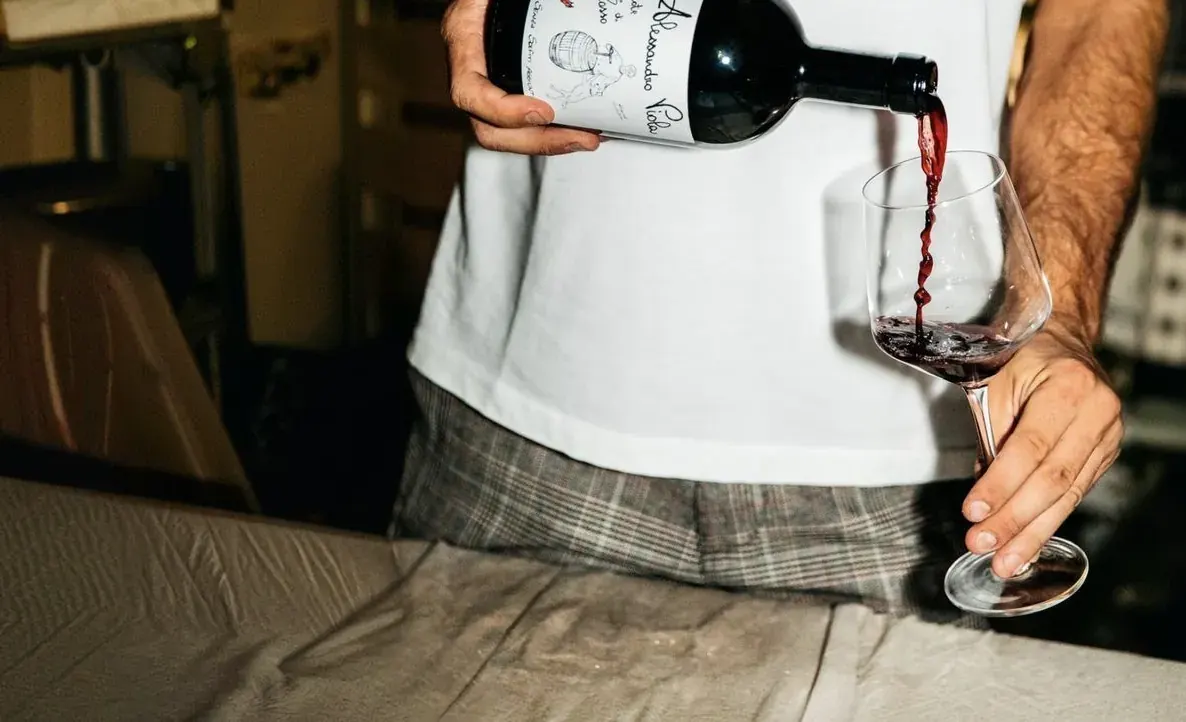
Barolo and Barbaresco are made from the same grape, Nebbiolo, in two neighboring parts of Piedmont in northwest Italy. The difference is that Barolo is usually the bigger, firmer, slower wine that needs more years before it tastes friendly, while Barbaresco is a touch lighter and softer, ready a little sooner, and often a little cheaper.
If you remember one line, make it this: Barolo is the one you wait for, Barbaresco is the one you can open sooner. Everything else below is detail, but it is useful detail when you are staring at both on a wine list.
same grape, two towns, and a river
Nebbiolo is a pale, perfumed red grape with a lot of tannin (the drying, grippy feeling a red leaves on your gums) and a lot of acidity (the mouthwatering tartness). It is famous for smelling like roses and tar at the same time, which sounds strange and is lovely. It only really thrives in a few spots, and the two most famous sit a short drive apart around the town of Alba.
Barolo is made in a cluster of eleven villages to the southwest of Alba. Barbaresco is made in a smaller area to the northeast, mainly the villages of Barbaresco, Neive and Treiso. The Barbaresco vineyards sit a bit lower, closer to the Tanaro river, and the soils there tend to be a little richer. The practical result is that Barbaresco grapes usually ripen slightly earlier and the wines come out a shade gentler. Barolo's hills are higher and more varied, and the wines tend to be more powerful and more structured.
Both are DOCG wines, which is Italy's top legal tier for a wine region. That label does not promise the wine is delicious, only that it followed the rules on grape, place and aging.
how they taste side by side
Pour them next to each other and you will notice how similar they are before you notice the differences. Both are light in color for a red, often a brick or garnet shade even when young. Both smell of sour cherry, dried roses, something earthy and a little bit of licorice. Both leave your mouth feeling dry and ready for food.
Then the differences show up. Barolo usually feels fuller and more muscular, with tannins that can be downright stern in a young bottle. The flavors lean toward cherry, tar, leather and dried herbs. Barbaresco tends to feel a little more delicate and more floral, with brighter red fruit and tannins that are present but less demanding. People have long called Barolo the king and Barbaresco the queen, and while that is a bit of a cliche, it does capture the mood.
If you have ever been surprised by how harsh a young Nebbiolo can feel, our guide to what tannin is in wine explains why, and why the same wine can taste completely different a few years later.
the aging rules, and why they matter to you
This is the part most guides skip, and it is the clearest difference between the two. Italian law sets minimum aging times before each wine can be sold, and they are not the same.
- Barolo must age at least 38 months from the November after harvest, with at least 18 months of that in wood. A Barolo Riserva must age at least 62 months.
- Barbaresco must age at least 26 months, with at least 9 months in wood. A Barbaresco Riserva must age at least 50 months.
In plain terms, Barbaresco reaches shops about a year earlier than Barolo from the same harvest, and it is built to be approachable sooner. That does not mean Barbaresco cannot age. Good ones go for decades. It just means that if you are buying something to drink this year, a Barbaresco is more likely to be in a good mood than a Barolo of the same age.
Those minimums are floors, not targets. Many producers hold their wines longer than the law requires, which is one reason the same vintage can show up on a list with a different year next to it depending on who made it.
which one to order tonight
Here is a simple way to decide when both are on the list and you do not want to think too hard.
- Pick Barbaresco if the bottle is young (say, under six or seven years old), if you are not eating something rich, or if it is your first Nebbiolo and you want the friendlier introduction.
- Pick Barolo if the bottle has some age on it, if you are ordering braised beef, lamb, a mushroom dish or anything with truffles, or if you want the fuller, more serious version of the style.
- Pick neither if you want a soft, fruity, easy red. Nebbiolo is not that, and no amount of price fixes it. A Chianti or a Valpolicella will make you happier.
It helps to know what you usually like before you spend this kind of money. A short taste quiz like the one in Green Glass turns that into a profile with a budget and plain "pour me" and "avoid" lines, and the app can then check a wine list or a bottle label against it before you commit.
If you are weighing these against other Italian reds, our Brunello vs Chianti guide covers the Tuscan side of the same question. Brunello is the Tuscan wine most often compared to Barolo in weight and price.
what you should expect to pay
Neither of these is a cheap wine, and that is mostly honest. Nebbiolo is fussy to grow, the vineyards are small, and the aging rules mean a producer sits on stock for years before selling it.
In US shops, entry-level Barolo usually starts somewhere in the $40 to $50 range and climbs quickly from there. Barbaresco often starts a little lower, and you can sometimes find solid bottles in the $30s. Restaurant prices run higher, as they do for everything. If you see either wine priced like a weeknight bottle, read the label again, because it is probably a Langhe Nebbiolo instead.
That is not a bad thing. Langhe Nebbiolo is the same grape from the wider area around both towns, with lighter aging rules, and it is the best way to find out whether you like the style at all. Many producers of serious Barolo and Barbaresco make one. Expect to pay roughly $20 to $35, drink it young, and if you love it, you know the pricier bottles are worth saving for.
One name worth knowing on the Barbaresco side is Produttori del Barbaresco, a long-running cooperative whose basic bottling is widely regarded as a fair-priced introduction to the region. It is a useful anchor when you are scanning a list and do not recognize anything else.
serving nebbiolo so it tastes the way it should
Both wines reward a little care, and both punish being served too warm. Aim for a cool room temperature, around 60 to 65°F. Warmer than that and the alcohol sticks out and the tannin feels harsher. A short spell in the fridge before opening does no harm at all.
Air is your friend here. A young Barolo in particular can taste tight and closed when you first pull the cork, and an hour or two in a decanter or even just a big glass helps it unfold. Our how to decant wine guide covers the simple version. Older bottles need less time and more gentleness, so pour those slowly and taste as you go.
Food matters more with Nebbiolo than with almost any other red. The tannin and acidity are built to meet fat and protein. Braised meats, roast lamb, mushroom risotto, aged hard cheeses and anything with truffle or butter all work. On its own at a party, a young Barolo can feel like a lot. Next to the right plate, it makes sense.
The last thing to say is that both wines change a great deal in the glass over an evening. If the first sip is not what you hoped, do not give up on it. Come back in twenty minutes. Nebbiolo is a slow talker, and that is a big part of why people fall for it.
questions people ask
Is Barolo better than Barbaresco?
Neither is better. Barolo is usually fuller, more tannic and longer-lived, while Barbaresco is a little softer and ready to drink sooner. The better one is whichever suits your meal, your budget and how long you are willing to wait.
Are Barolo and Barbaresco the same grape?
Yes. Both are made entirely from Nebbiolo, a pale, aromatic red grape grown in Piedmont in northwest Italy. The differences come from where the vineyards sit and how long each wine must age before sale.
Which is more expensive, Barolo or Barbaresco?
Barolo is usually a little more expensive. Entry-level Barolo often starts around $40 to $50 in US shops, while Barbaresco can sometimes be found in the $30s, though top producers of either can cost far more.
How long should you age Barolo and Barbaresco?
Barolo generally shows best after about 10 years from the vintage, and good bottles can go 20 or more. Barbaresco is usually enjoyable a few years earlier, often from about 6 to 8 years, and can also age for decades.
What food goes with Barolo and Barbaresco?
Both pair best with rich, savory food: braised beef, roast lamb, mushroom risotto, aged cheese and anything with truffles or butter. Their high tannin and acidity are made to meet fat and protein.