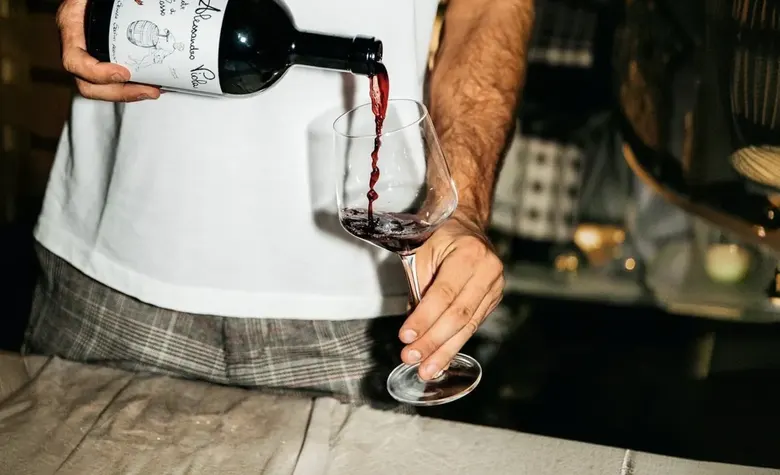
No, house wine is not bad. Most of the time it is a perfectly decent glass that the restaurant picked on purpose and priced to be the easy yes on the list.
The better question is not whether house wine is good or bad in general. It is whether this particular restaurant takes care of its bottles, and you can find that out with one friendly question before you commit to a glass.
what "house wine" actually means
House wine is the restaurant's default pour. When you say "a glass of red" without picking anything, this is what shows up. It is usually the least expensive wine by the glass, and it often has no grape or producer named on the menu, just "house red" or "house white."
Where it comes from varies. Some restaurants find a wine they like and buy it in volume, which earns them a better price for the commitment. Some pour a private label, which means a winery made the wine and put the restaurant's own name on it. Some use large-format bottles or kegs, which sound alarming but are simply bigger containers that keep wine fresh when a place goes through a lot of it. None of these is a red flag on its own. They are just ways to serve a lot of one wine without waste.
why house wine is usually fine, and sometimes great
Think about it from the restaurant's side. House wine is the glass they pour most often, so it is the one most likely to come back to the bar if people do not like it. A manager or wine buyer tasted several options and chose this one because it drinks well, suits the menu and does not start arguments at the table. Nobody puts a wine they are embarrassed by in front of every guest, every night.
Volume buying also works in your favor. A restaurant that commits to cases of one wine can usually pay less per bottle, which is why the house pour tends to be the best value on the list. You are not paying extra for a famous name or a famous region. You are paying for a wine someone chose to be easy to drink.
House wine is also usually picked to go with the food. An Italian place tends to pour a red with enough brightness to handle tomato sauce, and a pizza spot's house red is often chosen for exactly that job (our pizza and wine cheat sheet explains why). A steakhouse leans toward something with enough body to stand up to a ribeye. If you are already eating there, the house wine is often a quiet pairing recommendation, and nobody had to say a word.
when house wine disappoints
House wine is not always a win, and it is fair to know why. The problems are almost never about the wine itself. They are about how it is handled.
- Open too long. Wine starts to fade within a day or two of being opened, faster if the bottle sits uncorked on a warm counter. A busy restaurant pours its house wine constantly, so the bottle is always fresh. A slow night at a quiet place is where you get a tired, flat glass.
- Poor storage. Wine kept next to the espresso machine or in a sunny window gets cooked. Red served warm in a hot dining room tastes heavy and boozy. White pulled from a fridge set too cold tastes like nothing at all.
- Generic style. Some house wines are chosen to offend nobody, which can mean they excite nobody either. Soft, a touch sweet, smooth, forgettable. That is not bad, exactly. It is just not interesting.
- The wrong glass. Pouring a decent wine into a tiny, thick glass does it no favors. It is a small thing, but it changes how the wine smells and how much you enjoy it.
If you have had a bad house wine, it was probably one of these. The fix is to figure out which one, not to swear off the whole category.
how to ask about it without feeling awkward
You are allowed to ask what you are buying. Servers answer this question all day, and a good one is happy to tell you. A few phrasings that work at any table:
- "What is the house red?" You will get a grape, a region or at least a style ("it is a medium-bodied red from Spain"). That tells you plenty.
- "When was this bottle opened?" This sounds nervy but it is completely normal. If the answer is "just now" or "this afternoon," great. If the server has to go check, that is fine too.
- "Is the house white something you like?" Servers taste the wines they pour. An honest answer here is worth more than any menu description.
- "Could I try a small taste first?" Most places will pour you a sip of a by-the-glass wine before you commit. If they say no, order something else.
If the wine arrives and smells like wet cardboard, vinegar or nail polish, say so politely. "I think this bottle might be past it" is enough. You will get a fresh pour and nobody will think less of you. If you want scripts for the rest of the exchange, our guide to ordering wine at a restaurant without feeling lost covers the whole conversation.
You do not need to swirl and sniff like a critic to judge the glass. A quick look, smell and sip tells you whether it is fresh, and our beginner guide to tasting wine walks through it in a couple of minutes.
when to pay a few dollars more
House wine is the smart order more often than people think, but not always. A few situations where stepping up is worth it:
- The house pour is a style you already know you do not like. If inexpensive reds usually taste too soft and jammy to you, a few dollars more often buys something with more freshness and structure. Paying for a glass you will not finish is the real waste.
- The meal is the point of the night. If you booked a special dinner, the second or third cheapest glass on the list is often where the wine buyer parked their favorite value. The house wine was picked to be safe. That next tier was picked to be good.
- The list is clearly a passion project. When a restaurant names grapes, regions and producers for every glass, and the server lights up when you ask, let them steer you. You will learn something, and the price difference is usually small.
- The house wine is a mystery and nobody can tell you anything about it. Not knowing is not a crime, but it is a sign that wine is not a priority here. Pick something with a name on it.
If the menu does name the house wine's grape or region, treat it like any other wine on the list. A house pour from a region you already enjoy is just a normal glass with a smaller markup.
the short version
House wine is a decent, fairly priced glass that a restaurant chose on purpose. Order it when you want something easy, when the place is busy enough to keep bottles fresh, and when the style suits your taste. Ask one question before you commit, send it back if it is off, and spend a little more when the list or the occasion calls for it.
The one thing no server can answer for you is what your taste actually is. Green Glass starts with a short taste quiz so that the next time you see "house red" on a menu, you will know whether that is your kind of glass or a reason to read a little further down the list.
questions people ask
Is house wine lower quality than the other wines on the menu?
Not necessarily. It is usually the least expensive glass because the restaurant buys it in volume, not because it is worse wine. Quality depends more on how the bottle is stored and how recently it was opened.
What does "house wine" mean?
House wine is a restaurant's default wine by the glass, the one you get when you simply ask for red or white. It is often bought in volume and sometimes carries the restaurant's own label.
Is it rude to ask when the house wine was opened?
No. It is a normal question that servers hear often, and a good restaurant will answer it without hesitation or offer you a taste first.
Is house wine a good deal?
Usually, yes. The restaurant's volume price keeps the markup lower than on most other glasses, so the house pour is often the best value on the list.
Can I send back a glass of house wine?
Yes, if it is faulty. A wine that smells like wet cardboard, vinegar or nail polish is off, and most restaurants will replace it without any fuss.