A standard 5 ounce glass of dry wine has roughly 110 to 130 calories, and nearly all of them come from the alcohol. A sweet wine, a bigger pour or a stronger bottle pushes the number up, and a light, dry wine in a modest glass brings it down to around 100.
That is the short answer. The longer one is more useful, because "a glass of wine" is not one thing. A restaurant pour and a home pour are different sizes, and an 11 percent Vinho Verde and a 15 percent Zinfandel are different drinks. Below is where the calories come from, a quick way to estimate any glass in your head, and what actually moves the number. This is arithmetic, not medical or dietary advice.
where the calories in wine come from
Wine has two sources of calories: alcohol and sugar. Alcohol carries about 7 calories per gram, nearly double the 4 calories per gram in sugar. A dry wine, meaning one where the yeast ate almost all the grape sugar during fermentation, has very little sugar left, so the alcohol does almost all the work. There is no fat and no protein worth counting.
That is why the one number on the label that matters is the alcohol percentage, written as ABV (alcohol by volume) on almost every bottle sold in the US. A 14.5 percent red has noticeably more calories per glass than an 11 percent white, even though both are bone dry.
Sugar only becomes a big part of the picture in off-dry and sweet wines: some Rieslings, Moscato, Port, Sauternes and most bottles labeled "sweet red". If you are not sure what dry and sweet actually mean on a label, our guide to dry vs sweet wine sorts it out.
pour size changes the answer as much as the wine does
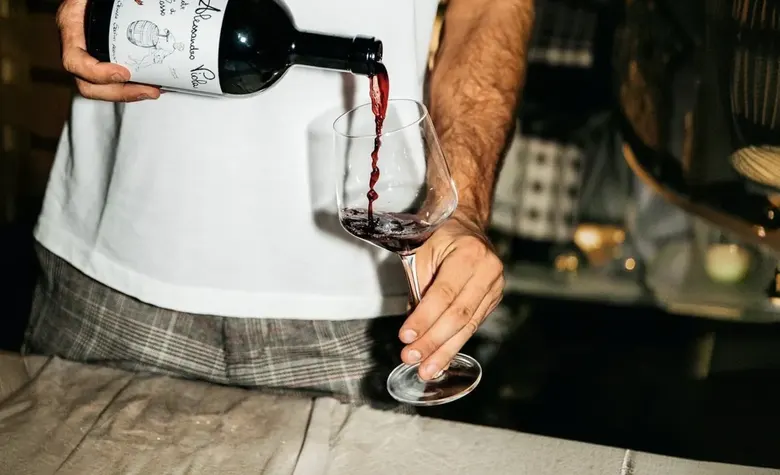
The 5 ounce glass used in nutrition tables is about 148 milliliters, and it is also the usual restaurant pour. At home most people pour more. A big-bowled red wine glass can hold 8 ounces and still look half empty, so a "glass" of wine on the couch can easily be two glasses by the official measure.
For a typical dry wine at around 13 percent alcohol:
- 4 ounce tasting pour: about 100 calories
- 5 ounce standard glass: about 120 calories
- 6 ounce generous restaurant pour: about 145 calories
- 8 ounce heavy home pour: about 195 calories
- Full 750 milliliter bottle (just over 25 ounces): about 620 calories
If you want to know what your own glass holds, pour water into it to the level you usually fill, then tip that into a measuring cup. Most people are surprised once.
calories by wine style, per 5 ounce glass
These are rounded ranges for a 5 ounce pour. Bottles vary, so treat them as a guide, not a label.
- Dry sparkling wine (Brut Champagne, Cava, Prosecco Brut), usually 11 to 12.5 percent alcohol: about 95 to 110
- Light dry whites (Pinot Grigio, Vinho Verde, Albariño), 11 to 12.5 percent: about 90 to 110
- Fuller whites (oaked Chardonnay, Viognier), 13.5 to 14.5 percent: about 115 to 125
- Dry rosé, 12 to 13 percent: about 100 to 115
- Lighter reds (Pinot Noir, Gamay, Beaujolais), 12.5 to 13.5 percent: about 105 to 120
- Full reds (Cabernet Sauvignon, Zinfandel, Shiraz, Malbec), 14 to 15.5 percent: about 120 to 135
- Off-dry and sweet light wines (Moscato d'Asti, Kabinett Riesling), 5.5 to 11 percent but with real sugar: about 95 to 130
- Dessert and fortified wines (Port, Sauternes, sweet sherry), usually served in a 2 to 3 ounce pour: about 90 to 140 per small pour, which makes them the most calorie dense wines ounce for ounce
Two things stand out. First, the spread between the lightest and heaviest dry wines is only about 40 calories a glass, less than most people expect. Second, the sweet, low alcohol wines that sound light often land in the same place as a dry red, because the sugar makes up for the missing alcohol. A sweet Moscato at 5.5 percent and a dry Pinot Noir at 13 percent can land within about 10 calories of each other.
Wines sold as "light" or "low calorie" get there by being lower in alcohol, usually around 8 to 9 percent, which puts a 5 ounce glass somewhere near 75 to 90 calories. They are not a trick, just a thinner wine. Our low alcohol wine guide covers the regular bottles that do the same job with more flavor.
a quick way to estimate any glass
You do not need a chart. An ounce of pure alcohol holds about 163 calories, which works out to roughly 1.6 calories for every ounce of wine per percentage point of alcohol. So:
Ounces poured x ABV x 1.6 = calories from alcohol.
A 5 ounce glass of a 13.5 percent red: 5 x 13.5 x 1.6 is about 108 calories, and a few more for the trace sugar and other bits in the wine bring it to the 115 to 120 you see in tables. A 6 ounce glass of 11 percent Vinho Verde: 6 x 11 x 1.6 is about 106. If the wine tastes clearly sweet, add 15 to 40 calories a glass depending on how sweet.
Two caveats. US rules give wineries a little leeway on the printed ABV, so the number on the label is close rather than exact. And most bottles carry no nutrition panel at all, because American labeling rules for wine have not required one so far, though some producers add it voluntarily. The formula gets you within a handful of calories, which is as precise as the label allows anyway.
what does not change the number much
A lot of the things people assume matter turn out not to. Red versus white makes almost no difference at the same alcohol level; the color comes from grape skins, not from anything with calories. Organic, natural, biodynamic and sustainable wines are made with different farming, not different math. Oak aging, price, age and the country on the label do not move the number either.
Carbohydrates are a small part of the story too. A 5 ounce glass of dry wine has under about 4 grams of carbohydrate, almost all of it leftover sugar. Sweet wines carry much more. If you have been told wine is "full of sugar", that is true of some wines and not of most dry ones.
What does move the number is the three things already covered: alcohol percentage, sweetness, and how much lands in the glass.
if you would rather drink a lighter glass
You do not have to give anything up to shave a bit off each glass. Pick a dry wine with a lower ABV, which usually means a lighter, fresher style anyway. Reach for dry sparkling wine, which tends to sit at the low end on both alcohol and sugar. Pour 5 ounces, which looks small in a big glass and completely normal in a smaller one. And at a restaurant, order by the glass when you only want one, instead of finishing a bottle because it is open.
If you know you like crisp, dry, lighter styled wines but never remember which grapes those are, Green Glass's short taste quiz turns that into a profile with plain "pour me" and "avoid" lines you can use at the shop or hand to a server.
One last thing people often ask alongside calories: red wine headaches. They are usually not about calories or sugar, and we cover the real suspects in why red wine gives some people a headache. If calories or alcohol matter to you for a health reason, that is a conversation for a doctor, not a wine blog.
questions people ask
How many calories are in a 5 ounce glass of red wine?
About 120 to 130 calories for a typical dry red at 13 to 14.5 percent alcohol. Lighter reds such as Pinot Noir sit at the low end and big reds such as Zinfandel or Shiraz at the high end.
How many calories are in a glass of white wine?
Roughly 100 to 125 calories for a 5 ounce pour of dry white wine. Light, lower alcohol whites like Pinot Grigio are near the bottom of that range and rich, oaked Chardonnay is near the top.
How many calories are in a bottle of wine?
A 750 milliliter bottle of dry wine holds about 600 to 650 calories, because it pours five 5 ounce glasses at roughly 120 to 130 calories each. Sweet and fortified wines are higher.
Does red or white wine have fewer calories?
At the same alcohol level they are almost identical, since the calories come from alcohol rather than color. White wines are more often lower in alcohol, so the average white glass is slightly lighter, but a 14.5 percent Chardonnay has more calories than a 12.5 percent Pinot Noir.
Is Champagne lower in calories than regular wine?
Usually a little. Brut Champagne and other dry sparkling wines tend to be around 12 percent alcohol with very little sugar, so a 5 ounce glass lands near 95 to 110 calories, and the traditional flute pour is smaller than that.